

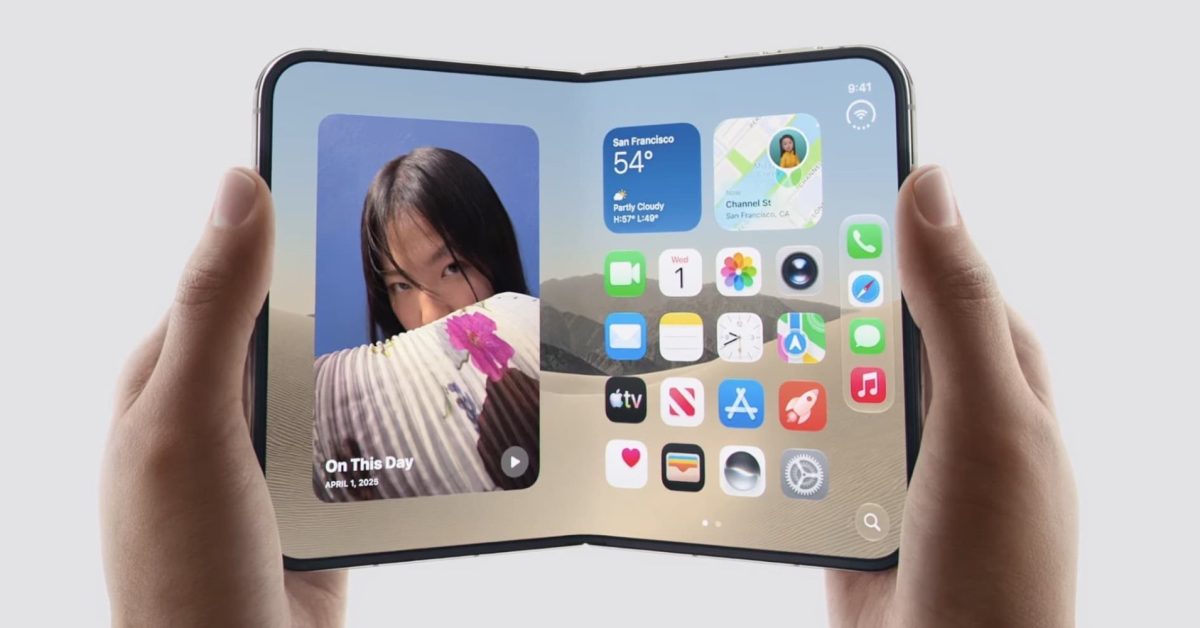
To be clear, I don’t mean any disrespect toward Apple Vision Pro. It’s undoubtedly a very nice device. But iPhone Duo and Apple Vision Pro are not comparable in the way critics are suggesting.
There’s an argument that iPhone Duo could run into the same issue that has affected Apple Vision Pro. Because of its high price and software designed specifically for the device, some believe it could miss rather than connect with consumers. Those situations are fundamentally different.
iPhone Duo does not face Apple Vision Pro’s biggest obstacles
The central flaw in that argument is that Apple Vision Pro does not replace a core device. It can serve as a portable movie theater, offer a more compelling window into gaming, and make mixed-reality experiences genuinely impressive.
Apple Vision Pro cannot replace your iPhone or iPad. It is an immersive world that happens to fit in a suitcase, and it functions mainly as a stationary appliance. It is not a compact tablet that slips into your pocket and goes with you everywhere.
Price is another major distinction. iPhone Duo’s $1,999 starting price is expensive, but it is not as daunting as some feared. People already pay premium prices for smartphones because phones are so central to modern life.
Apple Vision Pro’s original $3,499 starting price was never especially appealing, and it now begins at $3,699. That is nearly enough to purchase two iPhone Duos—money for an iPhone Quattro, if you will.
Utility, portability, and affordability all explain the largest difference. Apple Vision Pro struggles to become a mainstream consumer product for those reasons, which limits its ability to reach its full potential.
iPhone Duo combines an iPhone and a small iPad
iPhone Duo delivers the usefulness of an iPhone and a small iPad in a form factor that fits in your pocket. Its price is also comparable to buying an iPhone 16 Pro one year and then upgrading to an iPhone 17 Pro the next. That is not an unusual spending pattern.
iPhone Duo will certainly face a difficult road with software optimization, particularly for third-party apps. Apple has nevertheless built a thoughtful experience around its operating system and first-party applications. Developers will soon receive the tools needed to create strong apps for its versatile folding display.
The biggest challenge I see with iPhone Duo is that it is not yet the absolute best-in-class iPhone. I hope a future version reaches that level.
It would be ideal to combine the strongest features of every iPhone in one device, including the foldable screen. For now, however, the iPhone 18 Pro still leads in cameras and Face ID.
Still, consumers who are curious about trying a radically different iPhone design may not be deterred by those compromises.
In the kindest possible terms, Apple Vision Pro would envy the challenges facing iPhone Duo.
Do more with your Apple products
Apple AirTag 2 | Add Find My tracking to keys, bags, bikes, and more
AirPods 4 | Apple’s newest wireless headphones
AirPods Pro 3 | Apple’s best wireless headphones