

During a court session today, Apple contested the UK government’s refusal to publicly acknowledge whether it has mandated the company to grant access to encrypted user data. Below is a summary of the situation.
Some background
Nearly a year ago, The Washington Post disclosed that the UK government had covertly directed Apple to develop a means of bypassing security on all iCloud content uploaded by users globally.
The directive was also bound by stringent confidentiality agreements, prohibiting even Apple from revealing or discussing the request.
The UK government has consistently maintained a stance of neither confirming nor denying the presence of such individual directives, while organizations subjected to them are likewise barred from disclosing receipt.
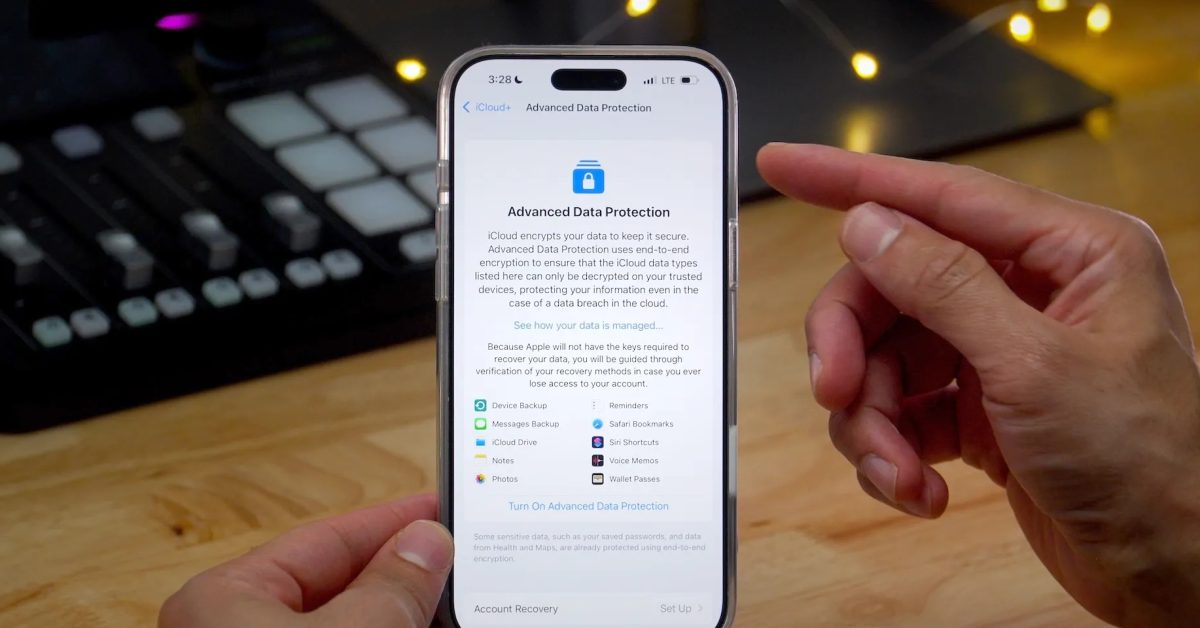
Due to the reported yet unverified directive, Apple discontinued the ability to activate Advanced Data Protection (ADP) for iCloud users in the UK.
This occurred because when ADP is active, iCloud Backup and other categories of iCloud data are secured through end-to-end encryption. Rather than conform to the UK’s request for a backdoor, Apple ceased providing ADP to new UK users entirely, despite the original directive allegedly affecting users worldwide.
At this stage, Apple’s dispute with the UK government involved two aspects: contesting both the actual demand for access to encrypted information and the confidentiality restrictions barring public commentary on the matter.
In April 2025, judges turned down the UK government’s effort to preserve secrecy around fundamental details of Apple’s legal challenge, determining that revealing the case’s existence would not jeopardize national security.
Several months later, the UK government abandoned its pursuit of data from US users under the covert directive due to pressure from the White House. While the demand did not vanish completely, the UK subsequently issued a revised notice focused solely on Apple users within the UK.
Fast-forward to a few weeks ago, when reports surfaced indicating that Apple had initiated a second legal challenge against the UK government following the replacement of the original global directive with a new one targeting only UK-based users.
This leads us to the current situation.
Apple contests secrecy requirements
As noted by Reuters, Apple today disputed the UK government’s ongoing refusal to acknowledge or reject the existence of the new Technical Capability Notice during proceedings before the Investigatory Powers Tribunal (IPT) in London.
Per Reuters, Apple’s attorney argued that the government’s confidentiality policy hinders meaningful public discourse and undermines the tenet of transparent justice.
According to the report:
During Thursday’s IPT hearing, Ben Jaffey, attorney for advocacy organizations Privacy International and Liberty, described the government’s stance as “absurd.”
“The genie is out of the bottle,” he observed, suggesting it was already widely known.
US lawmakers and officials had openly referenced the initial notice, while unnamed UK government sources had also validated it to media outlets, he stated.
Both he and Apple’s legal representative argued that the UK government’s NCND approach violated principles of open justice and hindered meaningful public conversation on the matter.
To clarify, today’s hearing centered on the confidentiality surrounding the directive, rather than the legality of the UK government’s authority to seek access to Apple’s encrypted data.
Following today’s proceedings, the IPT will determine whether the government can continue invoking its “no confirmation, no denial” policy in this matter. Reuters indicates that a comprehensive hearing regarding Apple’s challenge to the underlying Technical Capability Notice is unlikely prior to next year.
For Reuters’ complete coverage, visit this link.
Worth checking out on Amazon