

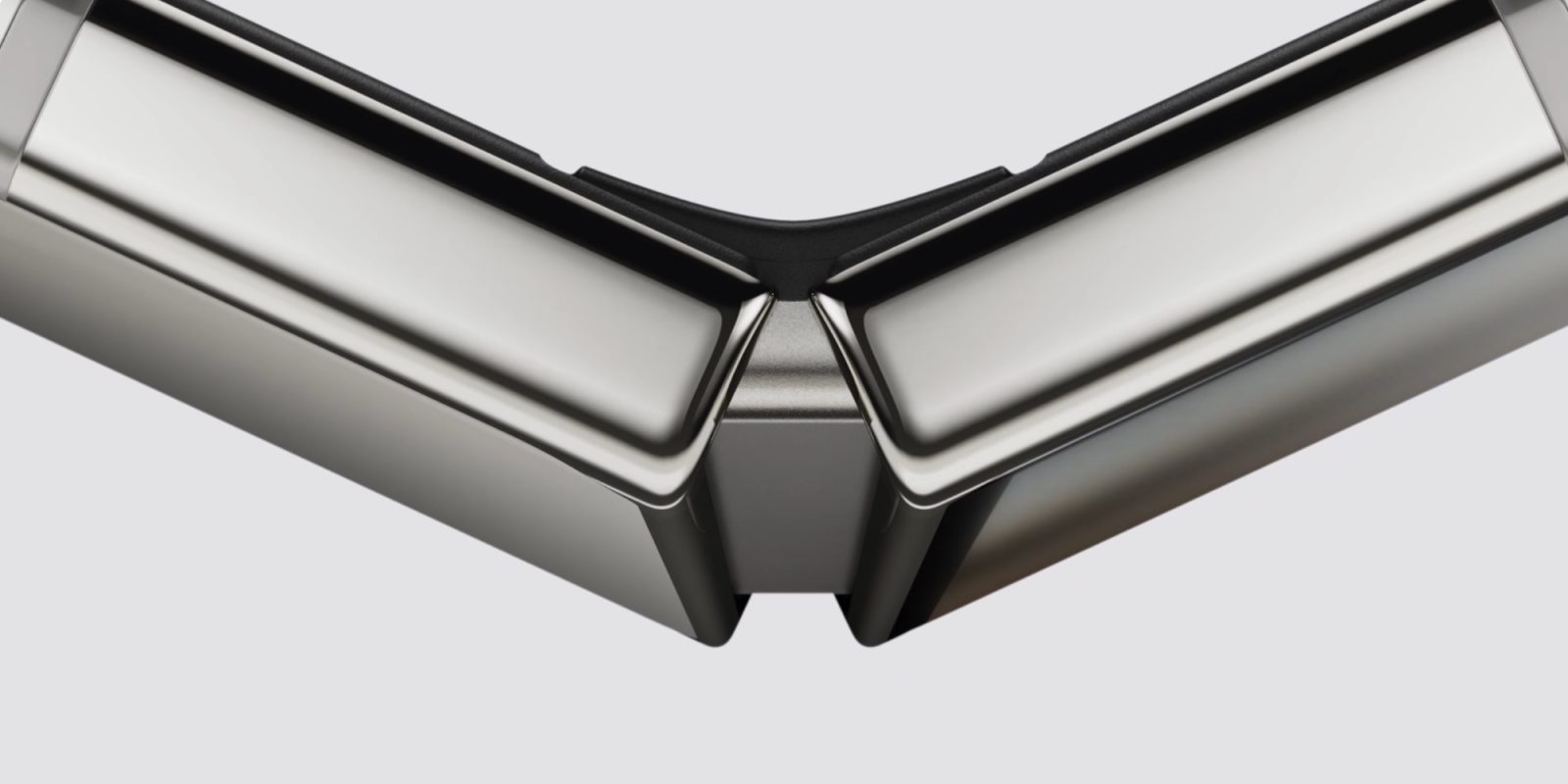
While a folding iPhone introduced a new hurdle for Apple’s thermal engineering team, they developed an inventive method to turn the device’s hinge to their benefit. Here’s how they did it.
iPhone Duo’s hinge incorporates a bendable graphite tube
PCMag recently interviewed Dan Murray, Apple’s vice president of silicon engineering, and Banafsheh Barabadi, the company’s senior manager of thermal product design, to explore the architecture behind the A20 Pro chip.
This new SoC, which powers the iPhone 18 Pro, iPhone 18 Pro Max, and iPhone Duo, marks Apple’s first iPhone processor built on a 2 nm process, following the technology’s introduction with the M6 chip in the Mac mini back in August.
Although the A20 Pro was engineered for all three new iPhones, the iPhone Duo variant includes additional features, such as a second display engine capable of running both screens at the same time.
From PCMag:
The iPhone Duo’s A20 Pro variant is just slightly different. “For iPhone Duo, we added a second display engine to support simultaneous operation of the inner and outer displays,” says Murray, “and with the increased CPU and GPU performance, we ensure we can deliver a smooth user experience across the displays. For the inner display, we also added support for placing the FaceTime camera behind the display.”
The iPhone Duo’s A20 Pro variant is just slightly different. “For iPhone Duo, we added a second display engine to support simultaneous operation of the inner and outer displays,” explains Murray, “and with improved CPU and GPU performance, we make sure we can deliver a seamless user experience across the displays. For the inner display, we also added support for placing the FaceTime camera behind the screen.”
The report provides a fascinating, detailed examination of the A20 Pro’s thermal design and the new vapor chamber Apple created to manage heat. This includes what Apple refers to as “metal over foam,” a substance that iFixit also analyzed during its recent teardown of the iPhone 18 Pro.
The second key element is a new material that connects the A20 Pro and the vapor chamber. “We refer to it as metal over foam,” says Barabadi, noting that it “essentially creates a direct thermal and mechanically compliant link between the SoC and the vapor chamber.
The second pillar is a new material that bridges the gap between the A20 Pro and the vapor chamber. “We call it metal over foam,” says Barabadi, and it “basically creates a direct thermal and mechanically compliant coupling between the SoC and the vapor chamber.
It is highly effective in removing the heat, meeting the strict mechanical requirements of the system. It took us months of development to get the material properties exactly right to be able to use this material.”
It’s very effective at heat dissipation, meeting the strict mechanical standards of the system. It required months of development to perfect the material properties to make this possible.”
Perhaps the most intriguing detail from the article is how Apple enhanced the iPhone Duo’s thermal efficiency, especially considering the difficulties of managing heat in a device that doubles in thickness when folded.
From the report:
“This was one of the most technically complex parts of our design,” states Barabadi. To tackle the problem, Apple integrated a flexible graphite pipe through the hinge itself to move heat between the two sections, thus expanding the surface area available for cooling.
“This was one of the most technically challenging aspects of our design,” says Barabadi. To surmount the issue, Apple routed a flexible graphite pipe through the hinge itself to transfer heat between the two halves, thereby increasing the surface area available for heat dissipation.
“This part need[ed] to be co-engineered between our thermal team and the mechanical team. It’s a flexible material that needs to survive, as you can imagine, many hinge cycles while maintaining its thermal connectivity, and also its structural integrity throughout the product life cycle.”
“This component had to be co-designed by our thermal and mechanical teams. It’s made of a flexible material that must endure, as you can imagine, countless hinge movements while preserving its thermal conductivity and structural integrity throughout the product’s lifespan.”
PCMag’s conversation with Murray and Barabadi also dives into the A20 Pro’s architecture, including the advantages of placing the DRAM beside the processor instead of stacking it on top, and you can read the full article here.
Recommended for checking out on Amazon